
Your home’s exterior is exposed to the elements every day. Sunlight, rain, humidity, wind, and temperature changes all take a toll on the surface protecting your home. While many homeowners automatically think of repainting when their exterior begins to fade or deteriorate, traditional paint is no longer the only option available.
Advancements in coating technology have introduced products designed to provide more than just a fresh appearance. Ceramic elastomeric coating systems, such as Rhino Shield, are engineered to create a thicker and more durable protective barrier than conventional paint. For homeowners researching exterior protection options, understanding the differences between latex paint, acrylic paint, elastomeric paint, and ceramic elastomeric coatings can help determine which solution best fits their goals, budget, and expectations.
Understanding the Main Types of Exterior Paint and Coating Options
Most exterior finishing products fall into one of four categories:
- Latex paint
- Acrylic paint
- Elastomeric paint
- Ceramic elastomeric coating systems
While these products may look similar from a distance, they differ significantly in how they protect a home’s exterior and how long that protection is designed to last.
Latex Paint
Latex paint remains one of the most widely used exterior finishes because it is affordable, readily available, and easy to apply. Modern latex paints are water-based and offer a wide range of color options, making them a common choice for homeowners looking to refresh their home’s appearance.
However, latex paint is generally considered the most basic option when it comes to long-term protection. Exposure to UV rays, moisture, and fluctuating temperatures can gradually cause fading, chalking, cracking, and peeling. While it can provide attractive results initially, many homeowners eventually face repainting cycles as the coating begins to wear down.
Key Characteristics:
- Lowest upfront cost
- Thin protective barrier
- Primarily focused on appearance
- More susceptible to fading and wear
- Typically requires more frequent repainting
Acrylic Paint
Acrylic paint is often viewed as an upgrade from traditional latex paint. It uses acrylic resins that improve adhesion, flexibility, and overall durability. Because of its improved weather resistance, acrylic paint has become one of the most popular choices among professional painting contractors.
Compared to latex paint, acrylic formulations generally hold up better against sunlight and moisture exposure. However, acrylic paint is still a paint product, meaning it will eventually degrade over time and require repainting as the protective film ages.
Key Characteristics:
- Better durability than latex paint
- Improved UV resistance
- Stronger adhesion to exterior surfaces
- Common professional-grade paint option
- Still requires periodic repainting
Elastomeric Paint
Elastomeric paint was developed to address a common problem on many homes: surface cracking. Unlike traditional paints, elastomeric coatings are designed to stretch and flex as exterior materials expand and contract due to weather conditions.
This flexibility makes elastomeric paint especially popular for stucco, concrete, and masonry surfaces where hairline cracks can develop over time. The thicker coating can also provide improved moisture resistance compared to standard paint products.
Key Characteristics:
- Designed to bridge hairline cracks
- Greater flexibility than acrylic paint
- Thicker application than traditional paint
- Strong moisture resistance
- Commonly used on stucco and masonry surfaces
Rhino Shield Ceramic Based Acrylic Coating System
Rhino Shield is a ceramic-enhanced coating system in a multi-layer design for long-term exterior protection. Rather than functioning as a single coat of paint, Rhino Shield is installed as a complete coating system that creates a substantially thicker protective barrier on the home’s exterior.
The goal is not only to improve curb appeal but also to help defend against moisture intrusion, UV degradation, surface movement, and other factors that commonly lead to paint failure.
Key Characteristics:
- Multi-layer ceramic elastomeric coating system
- Significantly thicker than traditional paint
- Designed for long-term durability
- Enhanced flexibility and crack resistance
- Intended to reduce repainting cycles
Rhino Shield vs. Traditional Paint: The Biggest Differences
Although all exterior finishes serve the same basic purpose, the way they protect a home can vary dramatically. To view Rhino Shield’s testing, click here.
The biggest differences homeowners typically notice include:
- Coating thickness
- Flexibility
- Weather resistance
- UV protection
- Longevity
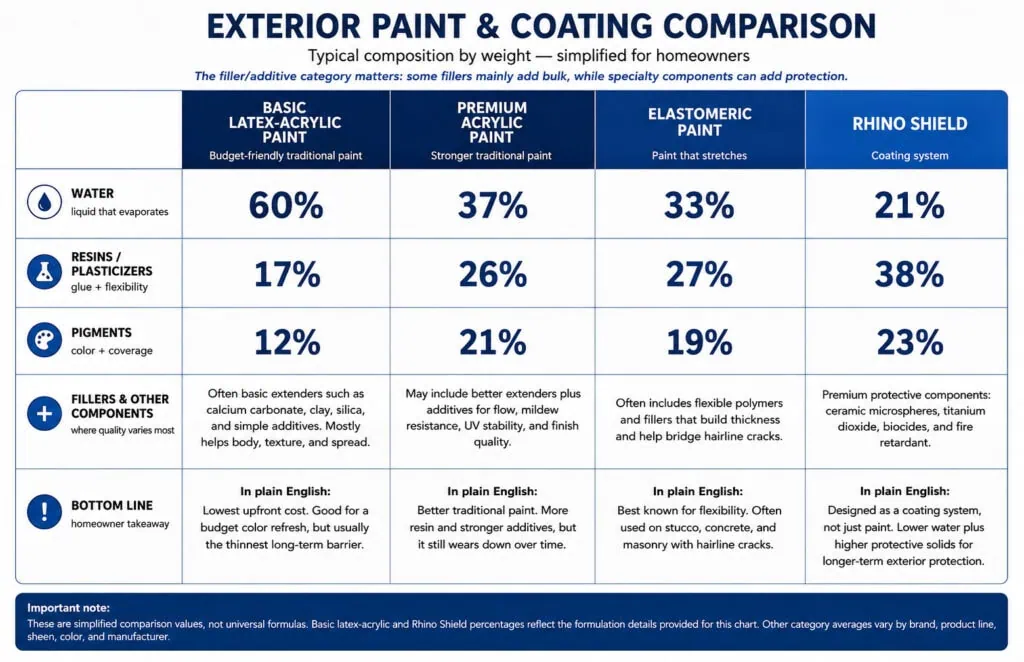
Thickness and Surface Protection
One of the most noticeable differences between Rhino Shield and traditional paint is the thickness of the finished coating.
Standard paint systems are designed to be applied in relatively thin layers. While this approach creates a smooth and attractive appearance, it also limits the amount of protection standing between the home’s surface and the environment.
Rhino Shield’s multi-layer system creates a substantially thicker protective barrier. This added thickness helps provide increased surface protection while also helping conceal minor imperfections that might remain visible beneath conventional paint.
Resistance to Cracking, Peeling, and Chipping
Every home experiences movement. Exterior materials expand during hot weather, contract during cooler temperatures, and respond to changes in humidity throughout the year.
Traditional paint can gradually lose flexibility as it ages, increasing the likelihood of cracking, peeling, and chipping. Once those failures begin, moisture can more easily penetrate the surface.
Because Rhino Shield incorporates elastomeric technology, it is designed to remain flexible and accommodate normal expansion and contraction. This flexibility helps reduce the stress that often contributes to paint failure over time.
Water Resistance and Weather Protection
Water is one of the most damaging forces affecting a home’s exterior.
Heavy rain, high humidity, and wind-driven moisture can gradually penetrate vulnerable areas and contribute to deterioration. Over time, moisture intrusion can lead to peeling paint, damaged substrates, mold growth, and expensive repairs.
Traditional paint provides a degree of water resistance, but that protection can diminish as the coating ages. A thicker ceramic elastomeric coating system creates a more substantial barrier designed to help reduce opportunities for moisture-related damage.
Color Retention and UV Protection
Sunlight is one of the primary reasons exterior paint fades over time.
Ultraviolet radiation gradually breaks down paint films, causing colors to lose vibrancy and consistency. In sunny climates like Florida, this process can accelerate significantly.
While premium acrylic paints generally outperform basic latex paints in this category, ceramic-enhanced coating systems are specifically designed to provide greater resistance to UV degradation and long-term color loss.
Mold, Mildew, and Algae Resistance
Warm temperatures and high humidity create ideal conditions for mold, mildew, and algae growth.
These issues commonly appear on shaded areas of homes, particularly surfaces that remain damp for extended periods. While many paint products contain additives designed to resist biological growth, effectiveness can vary over time.
Coating systems that emphasize moisture management and long-term surface protection can provide an additional layer of defense against the conditions that encourage mold, mildew, and algae growth.
Comparing Expected Lifespans
One of the most important considerations for homeowners is how long the exterior finish is expected to last.
Typical service life expectations include:
- Latex paint: Approximately 5–8 years
- Acrylic paint: Approximately 7–10 years
- Elastomeric paint: Approximately 10–12 years
- Rhino Shield coating system: 25+ years backed by a 25 year transferable warranty
Actual lifespan will vary depending on climate, preparation, application quality, and maintenance. However, longevity often becomes a major factor when homeowners compare the true value of different exterior protection options.
Comparing Long-Term Costs
Traditional paint usually costs less upfront, but Rhino Shield may cost less over time if it helps reduce how often a home needs to be repainted. The easiest way to compare the two is to look at the total cost over 15 to 25 years, not just the first project price.
Rhino Shield is not priced like regular paint by the gallon. It is a professionally installed ceramic coating system that is typically priced by square footage. Final pricing can vary based on the home’s size, surface condition, prep work, architecture, labor needs, and current promotions.
Traditional exterior paint generally has a lower starting cost, but it may need to be repeated several times. Traditional paint may require 3 to 5 repainting cycles over a 25-year period, with each repaint costing about $7,000 to $15,000+depending on the home and project scope.
That creates a major long-term difference:
- Rhino Shield estimate: Less than repainting multiple times
- Traditional paint over 25 years: About $21,000 to $75,000+ if the home is repainted 3 to 5 times
- Main takeaway: Traditional paint may be cheaper today, but repeated repainting can make it more expensive over time
Inflation can make future repainting even more costly. Over the past 20 years, U.S. cumulative inflation has resulted in a total price increase of 65.19%. In simple terms, something that cost $100 in 2006 would cost about $165.19 today.
Using that same average annual inflation rate of 2.54%, a paint job that costs $10,000 today could cost approximately:
- 5 years from now: $11,300
- 10 years from now: $12,900
- 15 years from now: $14,600
- 20 years from now: $16,500
That matters because traditional paint is rarely a one-time expense. If a home needs to be repainted multiple times, the second, third, or fourth repaint may cost significantly more than the first due to rising labor, materials, fuel, insurance, and contractor overhead.
Which Option Is Best for Your Home?
The right exterior finish depends largely on your goals and priorities as a homeowner.
Traditional paint may be a good choice if:
- You plan to move within a few years.
- Initial budget is the primary concern.
- You enjoy changing exterior colors frequently.
For homeowners in these situations, a lower upfront investment may make the most sense.
Rhino Shield is often considered by homeowners who:
- Plan to remain in their home long-term.
- Live in coastal or high-humidity environments.
- Want to reduce future repainting cycles.
- Prioritize protection and durability over short-term savings.
For these homeowners, long-term performance and reduced maintenance often outweigh the higher initial investment.
Final Thoughts
Choosing an exterior finish involves much more than selecting a color. The product protecting your home plays a critical role in its appearance, maintenance requirements, and ability to withstand years of weather exposure.
Traditional latex and acrylic paints continue to be popular because they provide attractive results at an accessible price point. Elastomeric coatings offer added flexibility and crack-bridging capabilities that can benefit certain surfaces. Ceramic elastomeric coating systems such as Rhino Shield take protection a step further by combining durability, flexibility, weather resistance, and long-term performance into a comprehensive exterior protection system.
Before making a decision, homeowners should compare more than just upfront costs. Evaluating lifespan, maintenance requirements, weather protection, and overall value can provide a much clearer picture of which option is best suited for their home’s needs over the long term.
FAQ’s
No. Rhino Shield is a ceramic-based coating system, not a regular exterior paint. It is designed to create a thicker, longer-lasting protective barrier on the home.
Acrylic paint is a traditional paint with improved durability. Rhino Shield is a thicker coating system designed for longer-term protection against weather, moisture, fading, cracking, and peeling.
Elastomeric paint can be better for surfaces like stucco, masonry, and concrete because it stretches and helps bridge small cracks. However, performance depends on the product and how it is applied.
Rhino Shield usually costs more upfront because it is a professionally installed coating system. The higher initial cost may help reduce future repainting cycles over time.
For short-term budgets, traditional paint may make sense. For long-term protection against Florida sun, humidity, rain, mold, mildew, and algae, Rhino Shield may be a stronger option.
Professionals like Rhino Shield of Florida have proven that with expert application and advanced technology, homeowners can enjoy a home that looks beautiful and stays protected for decades.
If you’re ready to stop worrying about fading paint and peeling walls, investing in a permanent exterior coating might just be the smartest move you can make for your Florida home.
If you’re interested in getting paint on your new home that’ll last far longer than the typical 5 – 7 years, check out Rhino Shield here.
You can also get a free, no-obligation quote from us by clicking this link.